
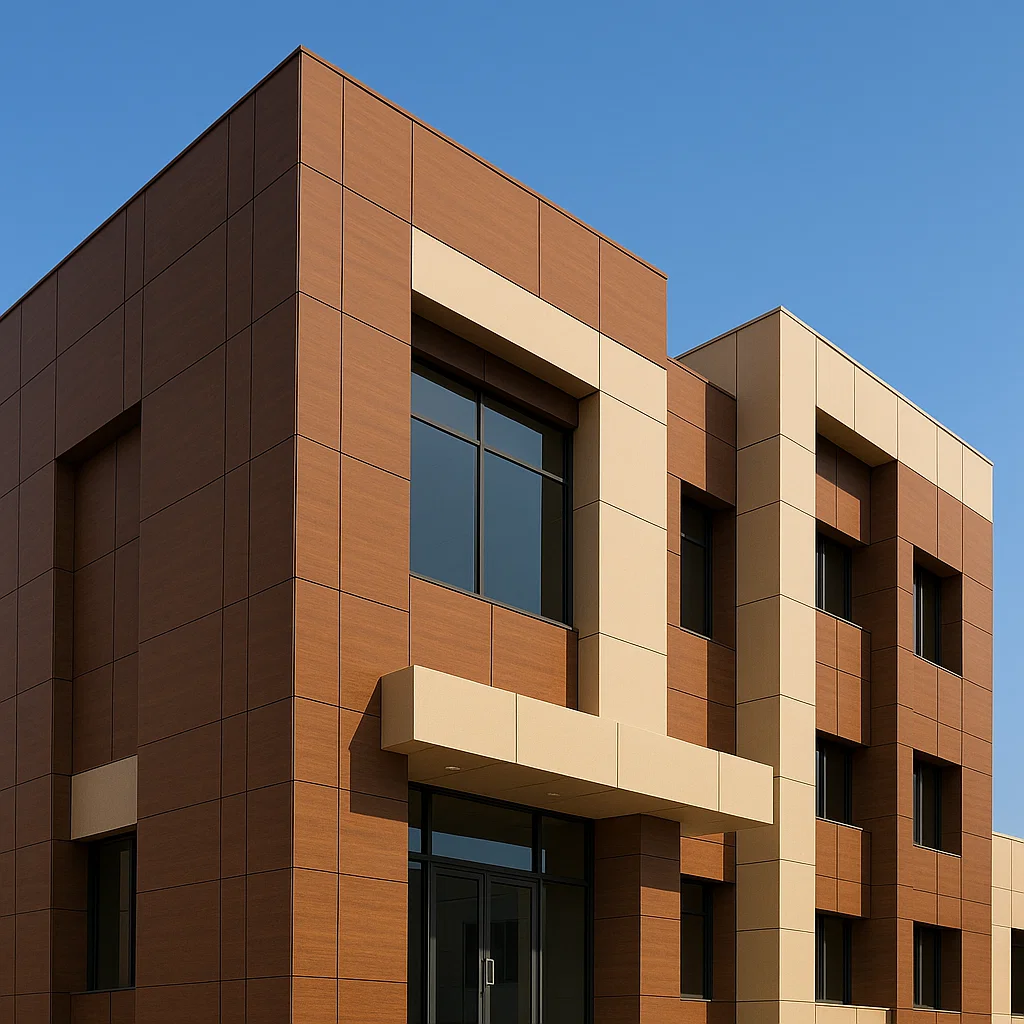
Step-by-Step Guide to Planning an Exterior Makeover with HPLMaker HPL Sheets
Most people know their home needs an exterior upgrade…
But they don’t know where to start.
Do you repaint?
Do you add tiles?
Do you try ACP?
Or do you go for exterior HPL sheets?
If you’re reading this, you’re already one step ahead — because HPLMaker HPL sheets have become one of the most reliable and premium choices for exterior facades in India. This guide will walk you through the entire process of planning an HPL-based makeover, from the first thought to the final installation.
No jargon. Just clear, practical steps.
Step 1 – Decide the Real Reason You Want a Makeover
Before you choose any material, ask yourself:
- Is your paint peeling and fading?
- Does the house look old compared to new buildings around?
- Are walls getting damp or fungus during monsoon?
- Do you want a more “premium villa” kind of look?
- Are you planning to sell or rent the property at a better value?
Your reason matters.
If your goals are better looks, better protection, and long-term value, then HPLMaker’s exterior HPL sheets already fit perfectly into your plan.
Step 2 – Study Your Home’s Exterior Shape & Problem Areas
Don’t jump directly to colors and textures.
First look at:
- Front elevation (main view from the road)
- Balcony walls
- Side walls visible from outside
- Boundary walls and gate area
- Staircase or shaft walls exposed in front
Ask:
- Which areas look the worst?
- Where does maximum sunlight hit?
- Where does rainwater flow or collect?
- Which walls are most visible from the road or entrance?
These are your priority surfaces. You don’t always need to cover the whole building. Even 40–60% HPL coverage, placed smartly, can completely change the character of the home.
Step 3 – Choose the Overall Look: Warm, Modern, or Bold
With HPLMaker, you’re not just buying a sheet — you’re choosing a style.
Three broad directions work best:
1. Warm & Natural (Wood Look)
Perfect for: villas, bungalows, independent homes.
Use wood textures like teak, walnut, and oak-style HPL sheets to create a cozy, rich, and timeless elevation.
2. Modern & Minimal (Charcoal / Cement / Stone)
Perfect for: urban homes, duplexes, commercial buildings.
Use dark matte panels, stone-inspired designs, and subtle cement textures for a sleek, contemporary look.
3. Bold & Unique (Contrasts & Highlights)
Perfect for: corner plots, showrooms, statement homes.
Use a mix of wood + dark shades or stone + light surfaces to highlight specific volumes like balconies, entrance frames, or vertical strips.
Pick one direction and stick to it.
Don’t mix too many colors and textures. 1–2 is enough. 3 is max.
Step 4 – Select HPLMaker Designs & Map Them on the Façade
Now that your style direction is clear, it’s time to shortlist actual HPLMaker designs.
What you should do:
- Pick 3–5 preferred HPL designs (wood, stone, matte, etc.).
- Take a front photo of your home.
- Roughly mark which surface will use which design:
- Example: “Main front wall – wood HPL”
- “Side frame – charcoal matte HPL”
- “Balcony underside – light texture HPL”
Even a hand sketch on paper is enough.
This gives you a visual plan, so you don’t randomly install panels and later regret the pattern or color.
Step 5 – Plan the Practical Side: Budget, Frame, and Fixing System
HPL is installed using a frame-based cladding system, not stuck like tiles.
Basic structure:
- A metal or aluminum frame is fixed on the wall
- HPL sheets are cut and mounted on that frame
- Proper screws and profiles are used
- Expansion gaps are left for temperature changes
When calculating your budget:
- Know your total cladding area (in sq. ft.)
- Add cost for sheet + frame + labor
- Don’t cheap out on frame quality or hardware
Yes, HPLMaker may cost more than paint in the beginning…
But over 20–25 years, it usually works out cheaper than constant repainting, patching, and maintenance.
Step 6 – Work with a Contractor or Fabricator Who Understands HPL
Even the best HPL sheet will look bad if installed poorly.
When talking to a contractor/fabricator, ask:
- Have you installed exterior HPL before?
- Do you know expansion joints and ventilation requirements?
- Which frame material will you use – MS, aluminum?
- How will you manage joints and corner detailing?
If they’re clueless, don’t experiment with your home.
Find someone with HPL installation experience — HPLMaker’s team or dealer can usually guide you on that.
H2: Step 7 – Combine HPL with Other Materials Smartly
Some of the most beautiful exteriors don’t use only HPL, but HPL + another material, like:
- HPL + white exterior paint
- HPL + glass railing
- HPL + stone cladding
- HPL + metal railing or grills
Use HPLMaker sheets to create accent areas and strong design elements and let simple painted surfaces act as the background.
This combination gives a very high-end architectural feel without needing to cover 100% of the wall.
Step 8 – Think Long-Term: Maintenance & Cleaning
One of the biggest advantages of HPLMaker HPL sheets is low maintenance.
No repainting.
No polishing.
No frequent touch-ups.
Simple cleaning tips:
- Rinse occasionally with water
- Use mild soap if heavily dusty
- Avoid harsh acids or metallic scrubbing
That’s it.
Your house keeps looking new, season after season, year after year.
Final Thoughts – A Planned Makeover Is Better Than a Random One
Most exterior makeovers fail because people do things in the wrong order:
They start with color, not planning.
They start with cheap material, not long-term thinking.
If you follow these steps:
- Define your reason
- Study your building
- Choose a style direction
- Map HPL designs properly
- Plan budget and frame system
- Use experienced installers
- Mix with other materials smartly
- Plan for easy cleaning
…you don’t just get an exterior makeover.
You get a properly designed, long-lasting, premium façade that makes you proud every time you look at your home.
And for that, HPLMaker exterior HPL sheets are one of the most powerful tools you can use.